
Best Pickleball Court Builders: 2026 Expert Guide to Professional Installation
Pickleball is one of the fastest-growing sports in the United States right now. Courts are popping up in neighborhoods everywhere. If you’re thinking about adding one to your property, picking the right builder matters more than you’d think.
Most people assume any concrete contractor can handle pickleball court construction. That’s where things go wrong. Building a court that actually lasts takes specific knowledge about drainage, proper concrete mixes, and surface materials. Get it wrong and you’ll be tearing it out in a year.
This guide breaks down the best pickleball court builders for 2026. We’ll cover what you can expect to pay, how to pick colors that won’t fade, official court dimensions, and the questions you should ask before hiring anyone.
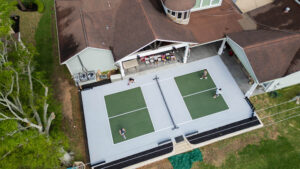
Top 5 Pickleball Court Builders in 2026

1. BuildMyCourts – Best Overall for Texas Projects
Where They Work: Houston, Dallas-Fort Worth, Austin, San Antonio
Why They’re #1: BuildMyCourts has built over 3,000 courts across Texas. They only do courts. That focus shows.
Their crews know Texas soil. Clay in Houston and DFW needs different base work than Austin. They account for that. Texas summers are brutal on concrete, so they adjust curing to prevent cracking.
What Makes Them Different:
Post-tension concrete on larger projects prevents cracks better than standard rebar. Concrete cures 30-35 days before any paint touches it. Most contractors start after 2 weeks to finish fast. That’s how you get bubbling paint by next summer.
Surfacing materials are approved by the Professional Pickleball Association. These acrylic coatings handle constant use and UV exposure. The playing surface stays consistent. The difference shows 3 years later when your court still looks new.
They handle everything in-house. Court Lighting for evening play, basketball court integration, fencing, nets, line striping. No subcontractors pointing fingers.
Use their court designer at buildmycourts.com/designer before committing to colors. See exactly how combinations look on actual layouts for your custom pickleball court.
Official vendors for Ryval Hoops, Jay Pro Sports, Laykold paint. They get the highest quality materials that meet Sport Court standards.
Types: Multi-sport setups, outdoor courts, commercial facilities, tennis, basketball, custom designs
Cost: Basic court starts at $34,000. Full setup with lighting and basketball hits $50,000-$75,000. Get a Free Estimate for your project.
Warranty: 1 year on paint and concrete. Most don’t offer any.
Real Work: Courts for NFL player DeAndre Hopkins. Elite Pickleball Club with 30 indoor courts. Airbnb owners seeing 50% booking increases. Thousands of satisfied customers across Texas.
Customer service matters. They return calls. Quality products, player safety focus. That’s why people across Houston, Dallas, Austin, San Antonio keep using them.
CONTACT US TODAY for free consultation.
More info: how a backyard court became the smartest home investment.
2. National Sport Court Franchise Builders
Coverage: Nationwide
Good For: Modular tile systems, established brand
Watch Out: Quality varies by franchise location. Some use subcontractors heavily.
3. Regional Asphalt Specialists
Coverage: Varies by area
Good For: Lower upfront cost, quicker install
Watch Out: Needs resurfacing every 3-5 years. Doesn’t handle extreme heat well.
4. Tennis Court Companies
Coverage: Regional
Good For: Experience with Tennis Court Construction, connections with country clubs
Watch Out: May not understand pickleball-specific requirements
5. General Concrete Contractors
Coverage: Local
Good For: Availability, lower bids
Watch Out: Usually lack court experience. Skip important site prep. Rarely offer warranties.
Pickleball Court Cost: What You’ll Actually Pay
Here’s the truth about pricing for your construction project. The cheapest bid usually costs you twice. Once for the build. Again to fix it properly.
Basic Backyard Court: $34,000-$45,000
This gets you proper site preparation and grading. Engineered concrete slab thick enough to handle use. The 30-35 day curing period that prevents cracking. Professional surfacing with acrylic coatings. Line striping that meets USA Pickleball standards. Basic perimeter fencing. Cost per square foot runs lower when you Build Pickleball Courts the right way from the start.
Premium Multi-Sport Setup: $50,000-$75,000+
Add custom court color combinations. Court Lighting for evening games. Professional basketball court system with adjustable height. Better fencing and net systems. Cushioned layers for player comfort.
Commercial Facilities: $100,000-$500,000+
Depends on how many courts you need. Indoor vs outdoor construction. Amenities like locker rooms. Site challenges with soil or drainage.
What Budget Contractors Leave Out:
They skip the soil testing. Don’t install proper drainage. Use concrete that’s too thin. Rush the paint after 7-14 days instead of waiting 30-35. Buy cheap surface materials that fade fast. Offer no warranty.
You end up with cracks within months. Paint peeling by summer. Standing water after rain. Then you pay a real court builder to tear it out and start over. Usually costs more than doing it right the first time. So much for lower cost.
Investment Returns:
Property owners see real returns. Airbnb hosts report booking increases up to 50% after adding courts. For your primary home, a well-built court becomes a major selling point for buyers with active families.
Pickleball Court Paint: Colors and Materials That Last

Don’t use regular concrete paint for court surfacing. You need specialized systems built for athletic use.
Professional Grade Coatings:
Good builders use materials approved by the Professional Pickleball Association. These acrylic coatings give you consistent ball bounce across the whole playing surface. They resist UV damage from sun exposure. The texture provides grip for player safety. Color coatings stay vibrant for years instead of fading to pastels after one summer. The surfacing system directly affects your playing experience.
How It Gets Applied:
Clean and prep the concrete surface. Apply primer that bonds properly. Put down 2-3 base color coats. Add texture and cushioning layers for player comfort. Final color coatings go on. Precision line striping completes it according to official Court Dimensions.
Popular Court Color Combinations for 2026:
Forest green playing area with blue service boxes gives you that classic look. Navy center with hunter green surround looks professional. Charcoal with lime green creates modern high contrast. Or go custom with your school or team colors. Picking the right court color matters for your overall look.
Design Before You Build:
Visit buildmycourts color designer to see different Color Combinations on actual layouts. You can try options before committing. Helps you visualize your dream court instead of guessing. This is how you get the Best Pickleball court surfaces that match your vision.
When Courts Need Refreshing:
Most pickleball court surfaces need attention every 5-8 years depending on use and weather. Professional resurfacing services evaluate the surface, do crack repair, apply Acrylic Resurfacer and fresh coatings, update line striping, and can even change colors. Some companies convert old tennis courts to pickleball during resurfacing.
Pickleball Court Dimensions: Getting The Size Right

Official standards matter whether you’re building new or converting existing space. Court Orientation and proper measurements ensure good gameplay.
Standard Pickleball Court Size:
The playing area for a standard pickleball court measures 20 feet wide by 44 feet long. Works for both singles and doubles play. Similar to doubles badminton court dimensions but with different service lines and court lines.
Total area with run-off space needs at least 30 feet by 60 feet. Make sure you have enough space. For competitive play, go 34 feet by 64 feet.
The pickleball net sits at 36 inches on the sidelines, drops to 34 inches at center. Net height matters for proper pickleball game play. You can use a permanent net system or portable net depending on whether it’s multi-use courts.
The non-volley zone (everyone calls it the kitchen) extends 7 feet from net posts on both sides. Understanding these court lines helps with proper layout.
Service courts run 15 feet deep by 10 feet wide. Four of them total with specific service lines marking boundaries.
Multi-Sport Layouts:
Full basketball court runs 50 by 94 feet. Fits 2 pickleball courts inside. Half court basketball at 47 by 50 feet accommodates 1 pickleball court with some overlap.
Standard tennis court measures 36 by 78 feet. You can fit 2-4 pickleball courts in that space.
Professional Court Builders design these layouts to meet official dimensions for each sport while maximizing what your site can handle.
What Separates Real Court Builders from Regular Contractors
Site Preparation Knowledge:
Real builders know sports construction starts with engineering the foundation. They analyze soil composition, which matters in Houston and Dallas where clay soil dominates. Design drainage systems properly. Grade for water management. Install vapor barrier and base materials like gravel where soil needs it. Proper prep extends court lifespan significantly.
Regular contractors treat this as basic dirt work and minimize it. That’s the main reason court projects fail early.
Concrete Expertise:
Court-specific concrete work differs from driveway concrete. Sport-specific mixes handle dynamic loads on sports surfaces better. Proper reinforcement means choosing between rebar and post-tension based on the project. Thickness needs to support athletic use. Finishing techniques like broom finish create consistent surface. Curing takes 30-35 days minimum, not rushed.
Texas Climate Adjustments:
Good teams understand Houston’s summer heat requires sprinkler systems during curing to prevent stress cracks. Austin and San Antonio need premium coatings to handle UV exposure. Clay soil in DFW requires engineered solutions. Weather changes fast in Texas so drainage systems need to be robust. This reduces maintenance costs long-term with less maintenance needed overall.
Quality Assurance:
Professional pickleball court construction companies following USA Pickleball Association standards provide written warranties. BuildMyCourts gives you 1 year on paint and concrete. They do concrete analysis before surfacing starts. Verify Court Dimensions meet standards. Provide support after installation. Give you maintenance guidance.
FAQ: Your Court Questions Answered
How much does it cost to build a pickleball court?
Professional residential courts run $34,000-$45,000 for basic installation. That includes proper site prep, engineered concrete, controlled curing, and professional acrylic surface application. Premium multi-sport courts with Court Lighting and basketball go $50,000-$75,000+. Cushioned pickleball court options with shock absorption for player comfort add to costs.
Returns on investment show up in property value increases. For rental properties, booking rates can jump up to 50%. Get a Free Estimate from your pickleball court builder for project pricing.
Going with budget contractors means often paying twice. Once for the failed job. Again for professional correction with experienced Court Builders.
How long does construction take?
Days 1-3 cover site prep, grading, and concrete pour. Days 4-30 (or 35 in winter) let the concrete cure properly. Days 31-32 handle professional surfacing and line striping with quality Surfacing Options. Total time runs about 5-6 weeks start to finish.
Companies promising faster timelines rush the curing. That leads to premature failure and ball response issues.
Can I use existing concrete?
Maybe. Needs professional evaluation. The existing slab must have proper thickness (minimum 4 inches). Be structurally sound with no high spots, major cracks or settling. Have adequate drainage slope. Meet Court Dimensions requirements for either private court or public court use.
Most existing slabs were poured for patios or driveways. Specs don’t work for athletic surfaces. Professional Court Builders assess whether your slab works or if you need new construction.
What’s best for outdoor courts?
Post-tension concrete with professional acrylic coatings performs best for outdoor courts. Provides crack resistance from engineered reinforcement. Gives consistent ball bounce. Resists UV from sun exposure. Needs less maintenance with 5-8 years between resurfacing. Works for multiple racquet sports.
Asphalt court options cost less upfront but need resurfacing every 3-5 years. They don’t handle extreme heat well and show more wear from pickleball players. Indoor courts in sports facilities give more control but cost significantly more to build.
Do I need permits?
Most Texas cities and zoning regulations require permits for concrete work, electrical installations like Court Lighting with fence posts, and fencing over certain heights. Professional construction companies handle permit coordination for both commercial courts and residential installations. Makes sure your project meets local codes whether you’re a sports enthusiast building a private court or developing public sports facilities.
How to Pick Your Builder
Look for Court Experience:
Find builders who specialize in sport surfaces. Not general contractors who add courts as extra service. Ask for references at completed facilities you can visit.
Check Who Does the Work:
Companies with dedicated team members for site prep, concrete, and surfacing give you better quality control. Avoid those who subcontract everything. When problems happen, subcontractors blame each other and you’re stuck.
Ask About Materials:
Get specific. What concrete specs do they use? How long do they cure it? What surfacing products go on? Do they provide warranty coverage?
Good answers show expertise. Vague responses mean inexperience.
Find Local Knowledge:
For Texas projects, pick builders familiar with clay soils, extreme heat, and weather changes. Companies serving Houston, Dallas-Fort Worth, Austin, and San Antonio with local crews understand these conditions.
Red Flags to Avoid:
Pricing way below market without explanation. Pressure for quick decisions without detailed proposals. Won’t provide references or let you tour facilities. No written warranty. Vague about timeline or curing process.
Start Your Court Project in 2026

Whether you want a family court for recreation, a competitive facility, or to boost your rental property value, the builder you pick determines everything.
BuildMyCourts brings Texas expertise to every project. Single residential courts to 30-court commercial facilities. Over 3,000 installations. Partnerships with top manufacturers. Customer satisfaction that keeps people coming back.
CONTACT US TODAY for free consultation and estimate. Visit buildmycourts.com to try the court designer tool, see their portfolio including residential and commercial pickleball courts, and start planning.
Professional installation means your court performs right for decades. Proper drainage. Consistent ball bounce. Player safety built in. The playing experience you want.
That’s the difference between contractors who do courts and professionals who do courts right.
BuildMyCourts works throughout Texas with teams in Houston, Dallas-Fort Worth, Austin, and San Antonio. They specialize in pickleball court construction, tennis courts, multi-sport courts, and resurfacing services. Learn more at buildmycourts.com.