
Your tennis court sees intense Houston heat, heavy rain, and constant play, leading to cracks, fading, and uneven surfaces that affect performance and safety. We specialize in restoring tennis courts throughout Texas with professional-grade materials and expert installation that lasts.
Whether you need minor repairs or a complete resurface, our experienced team delivers:
Asphalt courts
Existing surfaces
Concrete courts
Outdoor Tennis courts
Indoor Tennis courts
Tennis Court Repair and low spot patching
All Sport Surfaces
Resurfacing refers to the process of re-finishing and refurbishing the court’s surface. It is ‘painting a tennis court’ with a acrylic resurfacer and color coating. For repairing existing tennis courts, resurfacing also includes filling in water accumulation areas. The type of court also varies the resurfacing process in what repair products are used. For all hard courts surfacings, acrylic coating is used and sand is mixed in (up to 400lbs per 7200 SQFT court). For court repair involving surface cracks, patch binder is used.
Resurfacing tennis courts becomes necessary to maintain the quality and performance of tennis courts. The resurfacing process typically involves the following steps:
First, we remove any old paint if needed. Then we power wash the court to clean off dirt and debris. After that, we spray water on the surface and watch where it collects. These low spots are marked so we can fix them later.
Before painting, we use patch binder to fill cracks and damaged areas. This helps prevent future cracking and creates a smooth surface. We also use patch binder to fill low spots so water drains properly and the court lasts longer.
In the final stage, we start the full surfacing process. First, we apply a black primer to help the coating stick. Then we add six total layers of resurfacer and color. Once that’s done, we paint the game lines—whether it’s for tennis, pickleball, or a multi-sport court.
Pickleball courts are smaller than tennis courts, so you can fit more than one pickleball court inside a single tennis court layout. A standard 120’x60′ court can fit up to 4 pickleball courts. The process involves:
• Measuring and marking the correct dimensions for pickleball courts.
• Applying durable, high-visibility lines that won’t interfere with tennis play.
• Customizing colors to differentiate between sports while keeping a clean look.
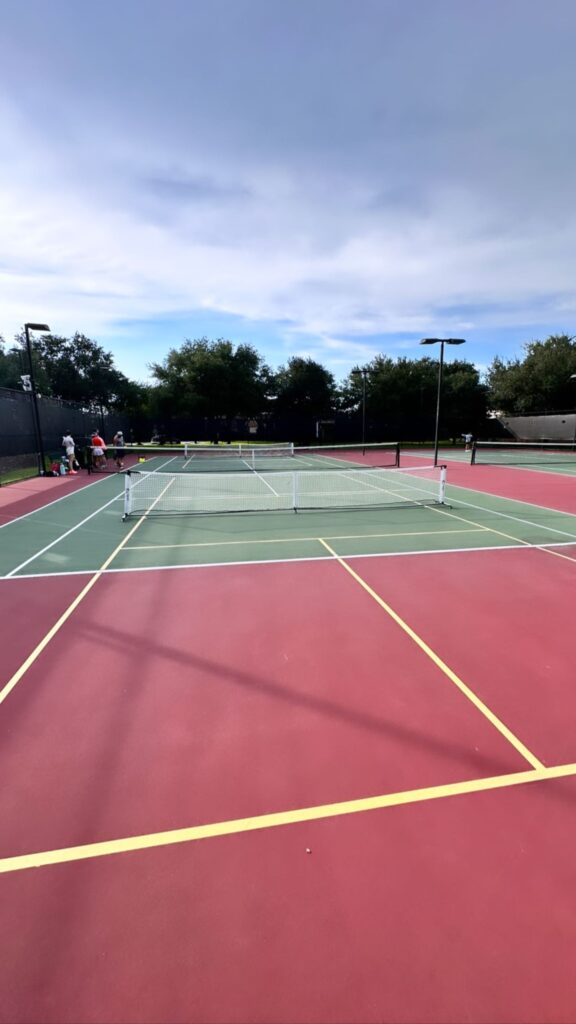
The cost to resurface a tennis court in Houston typically ranges alot depending on your court’s foundation type (asphalt, post-tension concrete, or standard concrete), the extent of crack repairs needed, bird bath (low spot) corrections, and how long it’s been since the last resurfacing. Houston’s extreme heat and clay soil expansion also impact pricing—courts that have gone 10+ years without maintenance require more extensive prep work. At Build My Courts, we specialize in durable, long-lasting resurfacing systems designed to withstand Texas weather, so your investment lasts 10-15 years instead of just 3-5.
Resurfacing is part the regular maintenance of a court. The more regular use a acrylic surface gets, the more often it needs to be serviced.
As tennis courts age, it leads to birdbaths, low spots, cracks and color fading. These bird baths overtime allow for water to pool and further damage and stain the acrylic paint surface. Resurfacing enhances longevity and performance with line paint and court color staying bright.
Cracks in the court surface affect aesthetics and pose tripping hazards. Resurfacing repairs cracks, ensuring a smooth playing surface and a expert tennis court. Patch binder is used to fill in cracks and minimize further damage on the new sport surface.
Over time, court colors and line paint fade due to sunlight, weather, or use. Resurfacing is the best solution for this. Every tennis court resurfacing includes repainting and enhancing visibility and appeal.
Cracks, low spots, and worn areas can ruin the game by causing bad bounces, slower play, and harder movement. Resurfacing helps restore a smooth, even surface for better performance.
With years of experience, we fix bird baths, low spots, and hairline cracks using professional patch binder. This makes sure the whole court is level and ready for consistent, high-quality play.
We offer tennis court surfacing for all types of clients. We resurface commercial courts at schools, gyms, and tennis centers. We work with public facilities like parks and city-run courts. We help private homeowners refresh or upgrade their backyard tennis courts. And we partner with country clubs to keep their courts in top shape for members.
The cost to resurface a tennis court depends on the size, type of surface, how much repair is needed, and where it’s located. Most projects cost anywhere from a few thousand to tens of thousands of dollars.
The repair method depends on the type of damage. Small cracks can be filled, while bigger problems may need patching or full resurfacing. It’s best to talk to a professional to get the right repair plan for your court.
An acrylic tennis court is a type of hard court built on a concrete or asphalt base. A smooth acrylic coating is applied to create a durable, even surface. This type of court offers consistent ball bounce and reliable performance for players.
The lifespan of an acrylic coating on a tennis court can vary based on factors such as usage, maintenance, and climate conditions. On average, it lasts around 4 to 8 years before requiring resurfacing or maintenance.
For small jobs such as a single tennis court it can take between 3-4 days. For adding additional courts its only an additional day per court on average. This is because certain parts of the resurfacing job can cover multiple at once and saves on paint drying time.